_edited.png)
Evolution and transformation

One of the ideas at the heart of Shroudwake is that character creation should not be something that happens once, at the beginning of a campaign, and then quietly ends. It should live with you. It should keep asking questions. It should keep opening doors. In Shroudwake, your character is not a finished product the moment you put numbers on a sheet. Your character is a living expression of a world still being changed by the Shroudwake itself, and that means growth is not just progression. It is transformation.
That philosophy shaped the mutation system from the ground up. In the core rules, mutation is described as “the engine of transformation,” the thread of identity that defines how a character fights, survives, grows, and becomes something more than they were before. Just as important, mutation is not static. It is a dynamic progression. It changes as the character changes. It responds to what they endure. It opens new choices not only in power, but in identity.
That mattered deeply to me as a designer. I have always loved character options, and I have always had a strong affinity for character creation. In a lot of games, I have sometimes enjoyed creating the character more than actually playing the character. I did not want that feeling to disappear after session one. I wanted Shroudwake to give players opportunities throughout the life of the character to keep participating in that creation process.
"Evolution is not just more power, but more authorship"
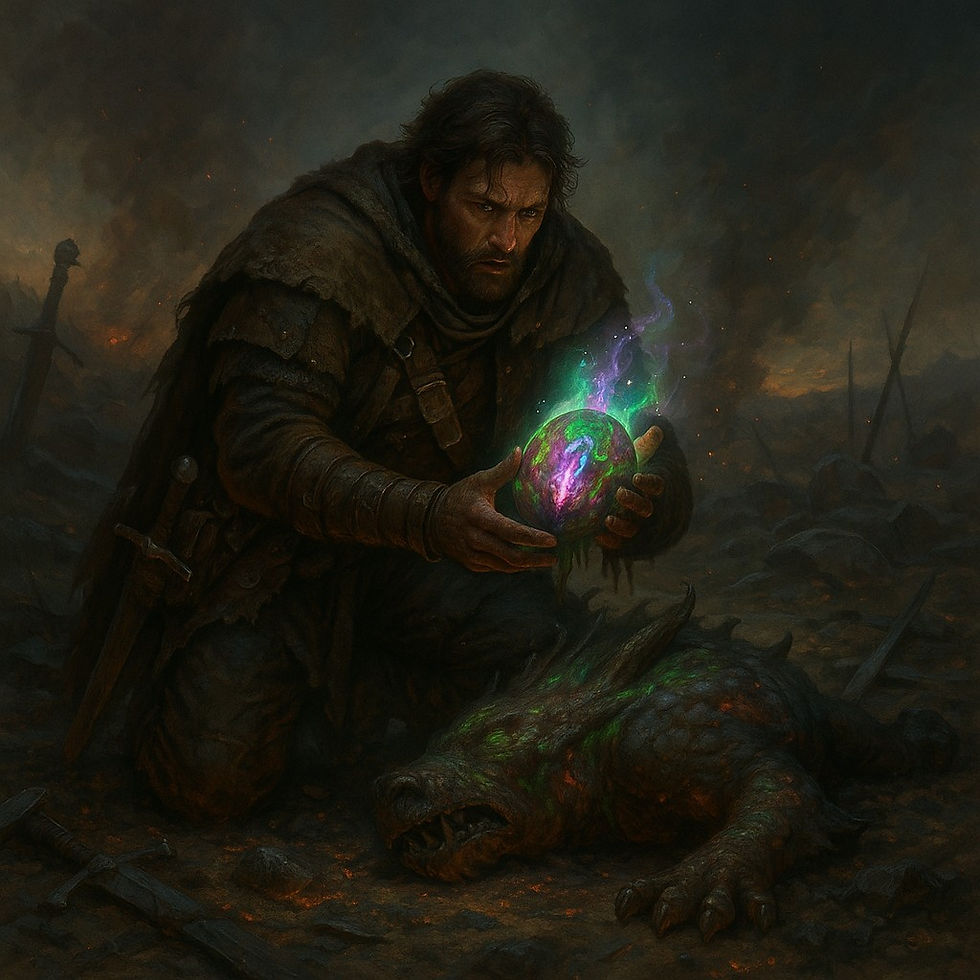
That is why every character begins with an Awakening Mutation but never stays there. The Awakening is the first expression of what the Shroudwake has done to you. It sets the tone of your origin. It gives you your first abilities, your first power, your first rhythm of movement and initiative. But in Shroudwake, beginnings are not boundaries. They are invitations. From there, your mutation unfolds through Paths and Evolutions: Awakening, Racial, Symbiotic, and eventually Legendary. These are not just upgrade tracks. They are decisions about who your character is becoming.
At key thresholds, that path changes shape. At levels 3, 5, 10, 15, and 20, your mutation evolves. Sometimes it fractures into dual paths, asking whether your power bends in one direction or another. Sometimes it broadens into racial expression, allowing your mutation to manifest through ancestral forms like Elf or Dwarf. Sometimes it fuses with a symbiotic force that does not replace your core mutation, but overlays it, changing how your powers behave and how your mutation expresses itself. And later still, it reaches toward the legendary. The system is built so that every evolution is not just more power, but more authorship.
That branching matters because it ties mechanics directly to lore. The Shroudwake did not simply create a fantasy world and stop. It continues to leave its imprint on life. The world was remade once, but it is also still being remade. Humans became elves, dwarves, dryads, and stranger things because the Shroudwake rewrote existence itself, and that lingering force still echoes through bloodlines, landscapes, creatures, and player characters alike. So when your character’s mutation begins to evolve along racial lines, that is not a cosmetic genre nod. It is the world’s history continuing to express itself through you.
This is one of the places where Shroudwake’s design and lore reinforce one another most cleanly. I did not want players to choose from fantasy archetypes that simply existed because fantasy tradition said they should. I wanted those archetypes to have a cause within the world. And once that cause existed, I wanted it to keep affecting the people living in it. The same force that explains why elves and dwarves exist is also the force that gives player characters meaningful agency in how their own transformations continue. The lore answers the why. The system gives players the how.
That ongoing authorship goes beyond mutation branches themselves. As characters level, they do not simply gain broader power; they gain new ways to shape how that power works. Enhancements allow players to refine their evolution in ways that feel personal and tactical. You might gain new ways to recharge mutation uses. You might gain additional uses altogether. You might become more resistant to aberrations. You might increase attributes or skills, enhance an existing ability, or unlock unique interactions with Adventure Points. In other words, progression in Shroudwake is not just about asking, “What new power do I get?” It is also about asking, “How does my version of this path behave differently from someone else’s?”
That kind of customization is important to me because it keeps the game fresh. In some other games, even when the editions change, the core experience of certain character types can remain very familiar. I wanted to move away from that. I wanted the sheer number of options at the start of the game and throughout progression to make it feel like you would have to purposely try to create the same character twice.
"The lore answers the why, the system gives players the how."
The Symbiotic layer especially opens that up even further. By the time a character reaches those later stages of progression, the question is no longer only which path they walk, but how that path becomes altered by a second force. Symbiotic evolutions are not separate branches that replace what came before. They are overlays. They change how your mutation powers operate. They let players tune expression as much as content. That distinction matters because it preserves continuity while still widening possibility. Your character does not become someone unrelated. They become a more particular version of themselves.
That same idea sits underneath the broader advancement structure of the game. In the corebook, advancement is framed not as bookkeeping, but as transformation. Every four Writs, you level. Every level gives you more health, another mutation power, and another enhancement. Every evolution gives you new paths, new powers, and new identity. The rhythm stays simple, but the meaning stays deep. The structure is meant to make growth easy to follow while ensuring that the choices inside that growth remain rich and expressive.

This also fits the larger ethos of Shroudwake as a cooperative, story-based game. Progression is tied to Writs and shared adventure, not to repetitive grinding or narrow incentives. I have said before that I wanted to design a game that rewards cooperation, innovation, and story participation rather than behaviors that work against the party or the narrative. That is part of why Shroudwake ties advancement to the experience of adventure itself. Growth comes through the journey, and the journey, in turn, shapes the kind of transformation available to you.
Ultimately, that is what I want mutations and evolutionary paths in Shroudwake to feel like: not a ladder, but a conversation. A conversation between player and world. Between mechanics and story. Between who your character was, who they are now, and who the Shroudwake is slowly pulling them toward. The world changes people differently. It takes them down different roads. It leaves different marks. So the game should too.
"Awaken to Destiny, Evolve into Legend!"


Comments